

Translocations
A translocation occurs when a piece of one chromosome breaks off and attaches to another chromosome. If a translocation is balanced, there is no gain or loss of chromosome material. Instead, the chromosomes are simply rearranged. If a translocation is truly balanced, it usually does not cause medical or developmental concerns.

The image above shows an example of a balanced translocation involving chromosomes 4 and 18. As you can see, a piece of chromosome 4 and a piece of chromosome 18 have “switched places”. There is no extra or missing chromosome material in a balanced translocation.
In some individuals, the translocation is unbalanced. This means that there is either too much or too little chromosome material. If the translocation involves chromosome 18, then the person may have some of the features of one of the conditions described on this website. For example, if the unbalanced translocation causes a loss of part of the long arm of chromosome 18, there will probably be some signs of 18q.
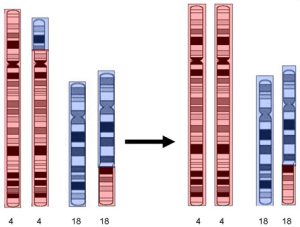
In the image above, the translocation has become unbalanced. There are two complete copies of chromosome 4, plus some extra material from chromosome 4 attached to one of the chromosome 18s. The extra material from chromosome 4 has replaced some of the material from one of the chromosome 18s. As a result, there is too little material from chromosome 18. A person with this chromosome make-up would have 18q- as well as partial trisomy 4.
If an individual has a chromosome 18 change as a result of an unbalanced translocation, there is frequently another chromosome change that is also present. Therefore, these individuals often have extra or missing chromosome material from another chromosome. Although we can never predict exactly how a person with a chromosome change will be affected by that change, it is particularly difficult to predict the outcome of an individual with an unbalanced translocation. This is because individuals with unbalanced translocations might have features of the chromosome 18 change as well as features of the other chromosome change that is present.
If you have a family member with an unbalanced translocation, the pages here on the Registry website may be useful as they describe some of the features of changes involving chromosome 18. However, if there is an additional chromosome abnormality present, you may wish to look for information specific to the other chromosome involved in the families may wish to look for additional information about the other chromosome abnormality. These websites may be useful:
• UNIQUE
• Chromosome Disorder Outreach
Partial Trisomy 18
As discussed elsewhere on this website, trisomy 18 occurs when there are three copies of chromosome 18 instead of two. Occasionally, only a part of chromosome 18 is duplicated. This is called a partial trisomy 18.
Partial trisomy may arise in several different ways. Occasionally, partial trisomy 18 results from an unbalanced translocation, meaning another chromosome change may be present. In other cases, the duplication of the chromosome is the only chromosome change present.
There are actually different types of partial trisomy 18. Some people have a duplication of the short arm of the chromosome. Other people may have a duplication of the long arm of the chromosome. Or, a person may have a duplication of part of the long as well as part of the short arm of the chromosome. Therefore, two people with “partial trisomy 18” may actually have very different conditions, depending on which part of the chromosome is involved. The information that follows is a brief overview of trisomies involving the short and the long arm of chromosome 18.
Trisomy 18p
If a person has a duplication of the entire short arm of chromosome 18, they have trisomy 18p. If only a part of the short arm is duplicated, they have partial trisomy 18p.
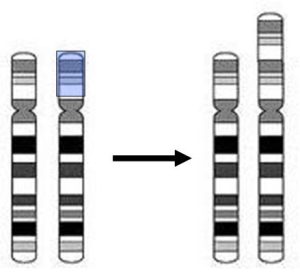
In the image above, a piece of the short arm of chromosome 18 has been duplicated. This results in three copies of the short arm of 18p.
In some instances, the extra piece of chromosome material may be located on a chromosome other than chromosome 18. This is most often the result of an unbalanced translocation.
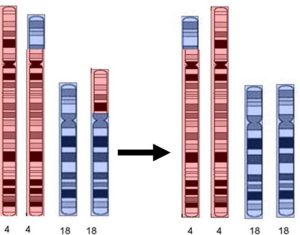
The image above shows a balanced translocation involving 18p and chromosome 4. On the left side of the arrow, the translocation is balanced. If the balanced translocation becomes unbalanced, it may results in partial trisomy 18p. In this example, the extra chromosome material is attached to chromosome 4. This is illustrated on the right side of the arrow.
In general, it appears that individuals with trisomy 18p or partial trisomy 18p have few, if any, major birth defects or abnormalities. Some people with partial or full trisomy 18p have some degree of developmental delays or mental retardation.
If an individual has trisomy 18p as well as some extra material from 18q, they are more likely to more significant medical and developmental problems.
Trisomy 18q
If a part of the long arm of chromosome 18 is duplicated, a person has partial trisomy 18q.
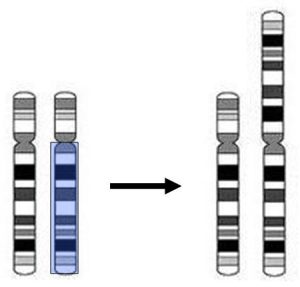
In the image above, a piece of the long arm of chromosome 18 has been duplicated. This results in three copies of 18q.
In some instances, the extra piece of chromosome material may be located on a chromosome other than chromosome 18. This is most often the result of an unbalanced translocation.
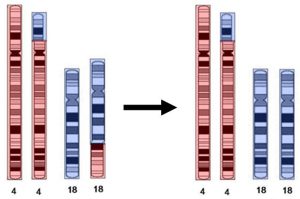
The image above shows a balanced translocation involving 18p and chromosome 4. On the left side of the arrow, the translocation is balanced. If the balanced translocation becomes unbalanced, it may results in partial trisomy 18q. In this example, the extra chromosome material is attached to chromosome 4. This is illustrated on the right side of the arrow.
Individuals with trisomy 18q generally have more medical and developmental problems than those with trisomy 18p. They often have features that overlap with complete trisomy 18. Based on the literature, the most common features of partial trisomy 18q include changes in muscle tone; seizures; small head size (microcephaly); a high-arched palate; feeding difficulties; heart defects; foot abnormalities; abnormalities of the genital and urinary systems; and growth retardation. Developmental delays and mental retardation are also common.
Isochromosome 18q
Isochromosome 18q is a chromosome abnormality that occurs when the short arm of one of the copies of chromosome 18 is replaced by an extra copy of the long arm of chromosome 18. Essentially, a person with isochromosome 18q has three copies of the long arm of chromosome 18 and only one copy of the short arm.

In the image above, the long arm of chromosome 18 is duplicated and replaces the short arm of the chromosome. This causes trisomy 18q as well as 18p-.
In general, people with isochromosome 18q have health and developmental problems that are similar to those of trisomy 18 and 18p-. The most common findings include changes in muscle tone; brain abnormalities (such as holoprosencephaly); heart defects; defects of the gastrointestinal and genitourinary systems; and orthopedic problems (mainly problems with the feet). Because many infants with isochromosome 18q have multiple birth defects, many pass away shortly after they are born. In the individuals that survive the newborn period, developmental delays and mental retardation are common.
For Additional Information:
The information provided here is general information based on the literature as well as the experiences in the Chromosome 18 Clinical Research Center. As always, we recommend talking with a clinical geneticist or genetic counselor to learn more about the specific chromosome change that has been identified in your family. You can locate a genetics provider at one of these sites: