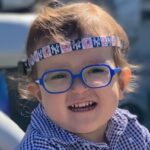
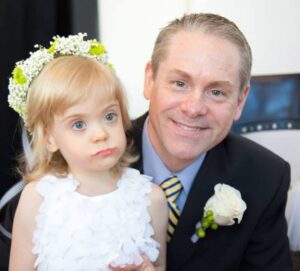
Welcome to Holland. It’s the name of an essay many of you are familiar with and one that has certainly described the last 5 years of my life. It’s a story about a journey that we don’t expect to take; a journey that is not at all like we thought our life would turn out to be. It’s often shared with parents that have premature babies or special needs children. But in our case, it was written for both. Our beautiful daughter Mackenzie (Kenzie) has become the centerpiece of our family’s life, teaching us the most important of lessons along the way and rewriting the book on all we thought was important. I’ll share that story here, with a little background first.
While I’m now proud to call Alabama home, I will always be a Hawkeye at heart. I grew up in the small farming community of Van Horne, IA, in the eastern part of the state near Cedar Rapids and Iowa City. I attended Coe College in Cedar Rapids where I graduated with a double major of Business Administration and Political Science. My college job was working for a newly formed direct marketing company called RuffaloCODY in Cedar Rapids, making part-time fundraising calls for colleges and universities across the United States. At the time, it was one of the better paying jobs a college student could get and I happened to really enjoy the work. I experienced a good deal of success in the non-profit fundraising world and eventually decided to turn it into a full-time career. Along the way, I’ve been fortunate to work with some of the top universities and philanthropic non-profits in the world as both as a business manager, executive, and strategic non-profit fundraising consultant. Today, I serve as Vice President & Senior Consultant for RuffaloCODY and received my credentials as a Certified Fundraising Executive (CFRE) in October of 2011.
During my time at RuffaloCODY in 2002, I met my future wife. To clarify, I actually interviewed her for a job that she ultimately chose not to accept. She lived in Alabama and decided not to relocate when RuffaloCODY offered her an employment opportunity out-of-state. However, we personally hit it off so well that we stayed in touch and found reasons to connect when we traveled for our jobs. After a 3-year courtship, we were married on the campus of Spring Hill College, in Mobile, AL—her hometown. We settled in Little Rock while I worked on my master’s degree at the University of Arkansas Clinton School of Public Service, spending 3 wonderful and perfect years in Arkansas- even buying our first home as we made our long-term plans. When we found out that we were pregnant with Mackenzie in the Spring of 2009, both of us agreed quickly that, while we loved Little Rock, we wanted to be closer to family as we began to enlarge our own circle. So we put our house up for sale in the middle of the housing crisis and somehow sold it within 24 hours of being on the market. Having a good realtor certainly helped, but we came away feeling that moving back to Mobile was just meant to be.
The summer of 2009 brought great promise for the Fisher family. We moved into our new home and began settling into the next chapter of our lives. The pregnancy was uneventful and went like clockwork, until around week 20. Following a routine ultrasound (when we found out we were having a girl), the OBGYN detected a minor issue with the heart and exchange of blood between the chambers. His equipment was good, but he wanted to be sure it was nothing of significant concern, so he sent us to a high risk doctor at the University of South Alabama. From that moment on, life was a roller coaster that we still ride today. Over the course of the next several weeks, Mandi would develop severe preeclampsia and was forced to undergo an emergency C-section at 27 weeks, 3 days. Mackenzie Fisher was born October 12, 2009 weighing just 1 pound and 10 ounces. She would spend the next 133 days in the neonatal intensive care unit (NICU) at the University of South Alabama Children’s and Women’s hospital, fighting through numerous issues and birth defects as we measured progress in grams and ounces over days and weeks. 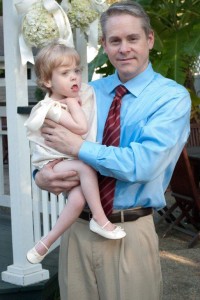
Because she was so tiny, there were many things we still didn’t know at the time of her birth, including her eventual diagnosis of Distal 18q-. Over the next several weeks and months, we discovered that she had several previously undiagnosed birth defects. She had a small cleft palate that prevented her from being able to create suction and drink from a typical baby bottle, meaning that she had to have a gastronomy tube placed before she left the NICU to ensure proper nutrition. She also had a 6mm atrial septal defect (ASD) in the wall of her heart, which was originally detected in the 20-week screening at the OBGYN, but the extent of which was never fully known until she developed congestive heart failure at 3 months old as a result of her tiny lungs not being able to keep up with the additional blood flow through the shunt (ASD). While scary, it was successfully treated through extensive diuretics until she was about 8 months old when the small hole eventually closed on its own. Other birth defects included an umbilical hernia associated with low muscle tone, slight ear canal stenosis, a somewhat flat mid-facial structure, and classic “stork bite” markings on her face and the back of her neck (most of which faded in time).
For the most part, we considered ourselves lucky that Kenzie had relatively treatable issues. Still, there was no explanation for the numerous congenital defects she had. Most of the birth defects were subtle and not outwardly obvious upon first glance. We were assured by a geneticist that she was fine; that she just had the “preemie” look. But frankly, our instincts told us otherwise, so we made the decision to ask for genetic testing.
After a week, the results came back and the neonatologist unexpectedly called us for a meeting. It was the longest 30 minute car ride of our lives as we rode in silence pondering what her diagnosis would be. When we arrived, the chief neonatologist had a medical encyclopedia out on his conference room table. Needless to say, when the chief neonatologist has to look up the name and description of the disorder in a textbook, you know it’s rare. We were stunned as he reviewed the two marked pages, line by line, telling us what little information he knew about the future our baby was facing. We met with the geneticist the next day to clarify facts and to provide a general roadmap for how we needed to move forward. In shock, we spent the next 24 hours calling family and friends, who attempted to provide support and comfort. Our journey in Holland was supposed to be brief, but this new diagnosis confirmed that we would become permanent residents of a world we knew virtually nothing about.
We brought our baby girl home from the NICU in February of 2010, settling into a life neither one of us expected. There were heart rate monitors, tubes and feeding pumps, hand sanitizer by the truckloads (H1N1 was in full swing then), special feeding bottles, and daily scale checks at home to make sure she was gaining weight. There was also constant reading and research, with e-mails and phone calls to professionals and other parents at appropriate times to self-educate on the known or potential issues she might face. Knowledge was the one thing I could have some control over in a seemingly uncontrollable circumstance. I love and accept my child for the beautiful, big blue-eyed girl that she is, with or without the genetic abnormality. But I’m also a realist and pragmatist at heart. She struggles with things other kids her age easily accomplish, and her life will include more obstacles and roadblocks than most other children will experience.
I realized early on that while Kenzie had great challenges, we weren’t helpless in our response. There were things we could do; skills that we had to offer. And so I sought out all information that could help our baby girl. Once diagnosed, I looked up Distal 18q- online and immediately found the Registry’s home page. We found it to be the only comprehensive source of information on her disorder. I cannot stress how important the Registry and their members have been over the past 4 years, providing knowledge, research, and comfort through the most difficult of times.
Just when Kenzie started to stabilize medically and we began to venture out confidently as a family, we were dealt yet another cruel twist of fate. On June 1, 2012, Kenzie lost her mother and I lost my wife, Mandi, to a sudden, unforeseen illness at 30 years old. In addition to the unimaginable grief I was feeling missing my best friend and closest confidant, I now had to raise Kenzie on my own as a single father of a special needs child. In just 6 short years, I went from the highest of highs to the lowest of lows. We managed the toughest of those times only with the help of family and friends until we could bridge the divide and somewhat piece together our new reality. Life for us today remains a work in progress. There is a chaotic, yet purposeful flow to each day and week, including countless appointments with specialists, therapists, and educators in addition to work and family time. Our goals remain the same as they did the day we were told of her diagnosis—to provide Kenzie endless amounts of unconditional love, to keep her as healthy and happy as possible, and to get her to her “A” game, wherever that may be on the developmental spectrum.
I’m blessed and humbled to have the opportunity to be on the executive board of directors and serve as the Vice President for Public Relations at the Registry. My goals are to make a meaningful difference in public outreach, provide new avenues for funding critical research, and find new ways to advocate for the families that are that facing a diagnosis involving these conditions. I’m confident that the mission of the Registry will continue to be met by the collective dedication of all those who serve and I am proud to be part of the organization.